Key takeaways
- Roasted coffee begins to lose volatile aromatic compounds within hours of exposure to oxygen, making post-roast protection a scientific necessity rather than a marketing choice.
- Oxygen and moisture barrier performance are the most critical packaging variables, outranking aesthetics, cost, and even sustainability credentials.
- Packaging represents a small fraction of a specialty bag’s retail cost while protecting the entirety of the upstream investment in sourcing, roasting, and quality control. The question of whether packaging affects coffee freshness comes down to one thing roasters can control: barrier performance against oxygen and moisture.
Does packaging affect coffee freshness? Yes – and the science behind it is more precise than most roasters realise. Specialty roasters invest months in green coffee selection, precise roast profiling, and quality control. Yet all that work culminates in a single point of vulnerability: the packaging.
That leaves roasters with the difficult task of selecting a format that genuinely protects its contents. The choice involves barrier materials, seal integrity, valve design, and an understanding of what happens to roasted coffee the moment it leaves the roaster.
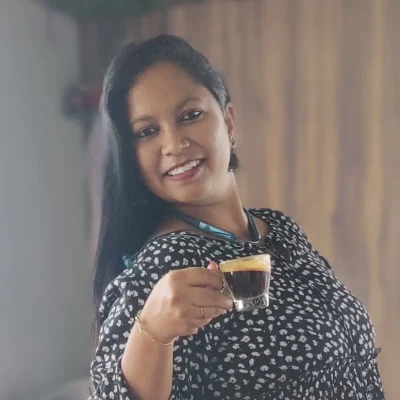
To find out how those decisions play out in practice, I spoke to Mikaël Portannier, World Roasting Champion 2025 and founder of Parcel Coffee. Read on for his insights.
Subscribe to our weekly newsletter
Sign up
How does packaging affect coffee freshness from the moment of roasting?
Packaging affects coffee freshness from the first hours after roasting, when volatile aromatic compounds begin to degrade upon contact with oxygen. Roasted coffee contains hundreds of aromatic compounds formed during the Maillard reaction and pyrolysis. Lipid oxidation begins within the first 24 hours after roasting and grinding, and trained sensory assessors detected rancidity in coffee packed in air after just four months.
Tasters in an SCA study preferred soluble coffee stored at 0% oxygen to coffee stored at 2% oxygen after only one week. Even at very low oxygen concentrations, degradation is measurable.
Research suggests that for every 1% increase in oxygen levels, the degradation rate increases by 10%. Freshly roasted beans also continuously release CO₂. CO₂ is one of the major gases formed during roasting and has important implications for coffee quality and coffee packaging requirements, with degassing kinetics extending over more than four weeks.
The highest rate of CO₂ release occurs during the first 24 to 48 hours after roasting. An increased build-up of carbon dioxide in valve bags during the first week partially forces oxygen out of the headspace, offering some protection during that window.
For Mikaël, this science has a direct operational translation. “Coffee packaging is the direct continuation of the roaster’s work,” he explains. “We can spend months selecting a coffee, building a precise roasting profile, and controlling every quality parameter. If the coffee is not properly protected after roasting, some of that work can be lost.”
His benchmark is clear: “The goal is for the customer to discover the coffee in a state as close as possible to how we tasted it during our quality controls.”
Which packaging features most directly affect coffee freshness?
When roasters ask how does packaging affect coffee freshness, the answer almost always comes back to three things: barrier material, seal integrity, and degassing valve design – and performance differences across these are significant.
Multi-layer laminates dramatically reduce oxygen and moisture vapour transmission rates, which is critical for long-term freshness. When roasters use high-barrier, unopened bags, roasted coffee can last up to four months, compared to two to four weeks with poor packaging.
Traditional bags use multilayer laminates with aluminium foil or metallised films to support six to twelve months for whole bean and three to six months for ground coffee. Compostable alternatives continue to improve, but they involve a trade-off: roasters seeking to retain a high degree of flavour and aroma for several months will need a barrier with a high-performance rating for both oxygen and water vapour.
Mikaël’s non-negotiables align precisely with the research. “Above all, I look for an excellent barrier against oxygen and moisture,” he says. “Oxygen is one of the main enemies of roasted coffee, as it accelerates the oxidation of aromatic compounds and lipids.”
He also elevates manufacturing consistency to the same level: “A very good material is useless if the seals are irregular or if performance varies from one batch to another.” The bag must hold up across real distribution timelines – days to weeks of transit – not just ideal laboratory conditions.
On degassing valves, the science supports their use. Without a valve, CO₂ pressure builds inside a sealed bag post-roast, creating either structural risk or the need to delay packaging. A one-way valve allows gas out while blocking oxygen ingress.
Mikaël’s view is nuanced: “I consider the valve more as a tool than an absolute requirement. Certain packaging systems or resting strategies can allow one to do without it. What matters above all is the final result: preserving the coffee’s sensory qualities until it is opened by the consumer.”

Does packaging affect coffee freshness enough to justify the cost?
Knowing that packaging affects coffee freshness is one thing; justifying the spend is another. Yes – and the economic case is straightforward once you consider what packaging actually protects. A bag itself typically represents a small fraction of the retail price.
Across food categories, packaging accounts for between 10% and 40% of a product’s retail price. Specialty coffee bags often sit toward the lower end of that range relative to the premium green coffee and roasting labour they protect.
The commercial consequences of cutting corners are real. Premature staling shortens the effective retail window and increases the likelihood of a poor first cup. It erodes repeat purchase rates – the lifeblood of direct-to-consumer roastery models. Brand damage from stale coffee is disproportionate to the cost savings it caused.
Mikaël has seen this firsthand. “We have all encountered situations where bags had seal defects, imperfect airtightness, or insufficient oxygen protection,” he says.
“The consequences are not always dramatic, but they exist: premature loss of freshness, reduced aromatic intensity, a less expressive cup, or accelerated ageing of the coffee. These are often details invisible to the consumer, but which become obvious when you compare a perfectly preserved coffee with the same coffee that has suffered slight deterioration.”
His economic argument is direct: “Packaging generally represents a relatively small share of the final value of a bag of coffee. Yet it protects all of the investment made beforehand: green coffee purchasing, transport, storage, roasting, quality control, communication, and customer relations. Saving a few cents on a bag can sometimes put several euros of value created upstream at risk.”
His reframe is the right one: “Good packaging is not an expense. It is an investment in consistency, customer satisfaction, and the roastery’s reputation.”
So, does packaging affect coffee freshness enough to treat it as a strategic decision? The evidence is unambiguous. Packaging is not the final step in the production chain. It is the last line of defence for quality. For specialty roasters, treating packaging as a strategic decision rather than a cost line item is the logical extension of everything that came before.
At MTPak Coffee, we help roasters protect that investment at every stage. Whether you are selecting barrier materials for a new release or reconsidering your current format, we help you find the right packaging for your volumes, distribution timelines, and sustainability goals.
Our MOQs start from as low as 200 units, every order comes with a lead time of as little as one week, and all options are available in sustainable materials with full customisation as you grow.
If you want your customer’s first cup to taste like your last quality control, contact our team.
FAQs
How does packaging affect coffee freshness after roasting?
Packaging affects coffee freshness by controlling exposure to oxygen and moisture. For every 1% increase in oxygen levels, the degradation rate increases by 10%. High-barrier bags can preserve roasted coffee for up to four months; poor packaging reduces that window to two to four weeks.
Does packaging affect coffee freshness more than roast date?
Both matter, but packaging determines whether a roast date means anything in practice. A precisely roasted coffee in a low-barrier bag will degrade faster than a well-roasted coffee in a high-barrier, properly sealed bag. Barrier performance and seal integrity are the variables roasters can control at the point of packaging.
Do one-way degassing valves improve coffee freshness?
Yes, in most cases. A one-way valve allows CO₂ to escape post-roast while preventing oxygen ingress, maintaining headspace protection during the critical first 24 to 48 hours. Certain resting or packaging strategies can compensate without a valve, but a valve remains the most reliable default for protecting freshness.
How much does packaging affect coffee freshness compared to storage conditions?
Packaging sets the baseline. Even in ideal storage, a low-barrier bag lets oxygen and moisture in, so freshness is lost regardless. A high-barrier, well-sealed bag protects the coffee across the full retail window.