Key takeaways
- Practical necessity, rather than a marketing calendar, usually starts a coffee packaging redesign at a small roastery.
- Minimum order quantities remain a defining constraint for small roasters, and designing around in-house labels can add flexibility that a pre-printed bag cannot match.
- A realistic coffee packaging redesign timeline accounts for material testing, supplier lead times, and life outside the business.
Rebranding a coffee bag looks simple from the outside. Behind the scenes, it is a months-long balancing act of budget, timing, and creative judgement.
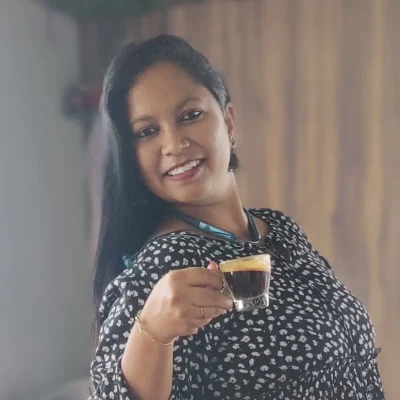
To understand what a coffee packaging redesign actually demands, this article draws on the experience of Andrea Grove, the founder of Elementary Coffee Co. Based in Harrisburg, Pennsylvania, the company recently completed a full redesign after 11 years with its original bags.
Andrea shared a candid account of the process, including what roasters should weigh before starting their own coffee packaging redesign. Keep reading for her insights.

When should roasters consider a coffee packaging redesign?
The coffee packaging redesign decision usually arrives when existing stock runs low, because reordering locks a roaster into the old design for another full print run.
Large companies can plan a rebrand around a fiscal quarter and a design department. A brief circulates, a designer picks it up, and the project moves forward on a predictable schedule. Micro roasters rarely have that luxury. There is no marketing team monitoring packaging trends, and no budget line sits ready for a rebrand simply because the calendar calls for one.
Andrea explained that practicality, rather than trend cycles, drives most change in a small business. As she put it, “in my experience, change is organic and driven by practicality more than anything else.”
For Elementary, the trigger was refreshingly unglamorous: the old bags were running out. Reordering the same design was the cheaper, lower-risk path forward. It required no new decisions and no fresh investment of time.
A redesign meant something else entirely: committing to a demanding, multi-month process with an uncertain outcome, all while keeping the business running day to day. There was no guarantee the new design would land, and no shortcut around the work ahead.
That tension between the safe choice and the ambitious one will feel familiar to many small business owners weighing a similar decision.
How do MOQs shape a coffee packaging redesign?
Minimum order quantities often decide the cost and flexibility of a coffee packaging redesign, and they remain one of the biggest constraints for small roasters.
Traditional printing processes like offset or flexography often carry MOQs that rarely fall below 10,000 units for fully customised coffee bags. Setup costs for plates and dies stay fixed regardless of order size. Newer digital and UV printing methods have started to lower that barrier. Some suppliers, like MTPak Coffee, now offer MOQs as low as 200-2,000 units.
Andrea’s situation reflects the traditional end of that spectrum. Reordering her existing bags meant a 10,000-unit minimum, locking her into the same design for roughly two more years. A redesign carried the same minimum, plus design costs, new plate fees, and production lead time.
Roasters weighing a redesign should map out MOQ options across printing methods before committing to a design direction. The printing process a roaster chooses early on can determine both cost and flexibility later.
One of the more instructive decisions in Andrea’s process was designing around a label printer rather than committing every detail to a single pre-printed bag. She wanted her new packaging to display current information about her coffee suppliers, farmers, and importers.
That meant the bags needed to support labels she could print and update herself. This shaped the entire design direction, including typography, spacing, and header layout. Her designer and brother, Jordan Grove, developed each of these elements.
This approach offers a lesson for roasters juggling sourcing relationships that shift from season to season. A bag that works with adjustable labelling avoids locking single-origin details, harvest information, or partner credits into a fixed print run.

How long does a coffee packaging redesign take?
A coffee packaging redesign at a small roastery typically takes several months once material testing, supplier lead times, and personal schedules are factored in.
Redesigns are not only about graphics. Andrea’s team spent significant time testing bag folds, seams, and embossed ink across different material samples. They worked closely with her packaging supplier to determine how the bag’s sides would fold given the material she chose.
Material selection has real consequences for both production timelines and cost. Printing method, material, and finish all influence how long an order takes to produce. Andrea’s own bags took roughly ten to fourteen weeks to arrive after ordering.
Roasters should build these variables into their planning early. A design that looks finished on screen can still stall for weeks over a folding or seaming issue that only appears once real material samples arrive.
Perhaps the most relatable part of Andrea’s account is how unevenly the work actually progressed. The team reviewed concepts over a meal in the Netherlands and tackled printer calibration between shifts. Design direction also shifted after a break over the holidays, introducing a new colour decision that resolved earlier disagreements.
Andrea acknowledged the emotional weight of the project, noting that by the time the bags finally arrived, “it was just relief when it all came together.”
This underscores a point worth planning for directly: a coffee packaging redesign at a small operation rarely moves in a straight line. Building in slack for personal schedules, travel, and simple burnout matters as much as budgeting for the printing invoice.
A coffee packaging redesign is never purely a creative exercise for a small roaster. It is a supply chain decision, a budget decision, and often a deeply personal one that sits atop the daily work of running a business.
Andrea’s experience shows that success comes from realistic timelines, trusted collaborators, and design choices that favour flexibility over permanence. Roasters considering a redesign of their own should treat MOQs, materials, and lead times as seriously as the visual concept itself.
Andrea’s story reflects a challenge many roasters recognise: balancing creative ambition against MOQs, lead times, and tight budgets. MTPak Coffee exists to ease exactly that tension. With digital and LED printing options, roasters can access custom coffee packaging with MOQs as low as 200 units. This removes the need to commit to 10,000-unit orders before a design proves itself.
MTPak Coffee offers a path at every stage of growth, from stock bags for testing to single-colour branding on a budget. Once volume justifies it, fully customised pouches follow, without forcing a coffee packaging redesign to outpace the business behind it.
For more information about planning a coffee packaging redesign, contact our team.
FAQs
Is a coffee packaging redesign worth it for a micro roaster?
Often, yes, but only after weighing design costs, plate fees, and MOQ commitments against a straightforward reorder. MTPak Coffee makes this decision easier by offering digital printing with MOQs as low as 200 units, so a redesign no longer requires a five-figure commitment.
What MOQs should roasters expect for a coffee packaging redesign?
Traditional offset or flexographic printing often requires minimums of around 10,000 units. Digital and UV printing methods now allow MOQs as low as 200 to 2,000 units. MTPak Coffee sits at the accessible end of that range, with fully customised bags from 200 units and lead times as short as one week.
How can roasters build flexibility into a coffee packaging redesign?
Design the bag to work with labels the roastery can print in-house. This keeps single-origin details, harvest information, and partner credits out of a fixed print run. MTPak Coffee simplifies this further with low-MOQ custom printing, allowing roasters to update full-bag designs between releases rather than relying on labels alone.