Key takeaways
- Unique coffee packaging works best when it begins with a story rather than a container.
- Sourcing hurdles and capacity limits reshaped The Old Tape for the better, pairing a cassette keepsake with a separate sealed 100g bag.
- Unique coffee packaging can earn a first purchase, but coffee quality decides whether customers return.
Specialty coffee shelves are crowded, and a well-roasted bean alone rarely stops a shopper mid-aisle. Many roasters now treat the package as part of the product, using it to signal values, spark curiosity, and invite people to share the experience. Yet unique coffee packaging raises practical questions about cost, freshness, sourcing, and sustainability.
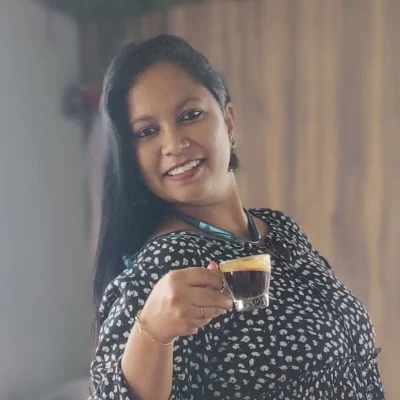
We spoke with Ismatt Dosanjh, founder and creative director of LUNGO, about The Old Tape, a limited-edition coffee presented with a repurposed cassette case. Her experience offers a candid look at how roasters can make unique coffee packaging work without losing sight of the coffee itself. Read on for her insights.
Subscribe to our weekly newsletter
Sign up
How does storytelling turn unique coffee packaging into a brand experience?
It gives every design decision a reason. Once a roaster knows the feeling it wants to recreate, the format, materials, and details all follow from that single idea.
Ismatt built LUNGO around nostalgia, so a first-anniversary release had to feel personal. She considered a coffee-scented candle and a ceramic cup before a box of her grandfather’s cassettes, photographs, and handwritten notes shifted her thinking. Hours spent in a friend’s record store deepened the pull. Conversations with the roasters then led to a rum-barrel-aged coffee, a fitting partner for a concept of time and memory.
She explains the format’s emotional logic simply: “a scratched cassette or a faded note can instantly transport you back to a moment, and I wanted to recreate that feeling through coffee.” The buyer’s experience changes too. “Instead of simply opening a bag of coffee, you’re uncovering an object with a story, something that feels found, remembered, and lived in.”
Once she chose the cassette, “every design decision became an extension of the same narrative.” That is how imagery and story work together on a pack, and it is what separates exceptional coffee packaging from decoration.
The wider market is receptive to that kind of object. US cassette sales reached 436,400 in 2023, up from 80,720 in 2015. Northeastern University’s Andrew Mall links the revival to interest in the cassette as an aesthetic object.
Younger consumers appear central to both trends. Gen Z is the biggest demographic of US listeners who buy cassettes, and 69% of adults aged 25 to 39 had specialty coffee in the past week. That audience also explains why limited edition coffee packaging keeps earning its place.
What design and sourcing challenges does unique coffee packaging create?
Capacity and supply, usually in that order. A cassette case holds barely 15 grams of coffee, so unique coffee packaging built around a found object often needs a second component.
The first obstacle was capacity. Once the team vacuum-sealed a cassette, it could hold only about 12-15 grams of coffee. They paired it with a separate 100g bag, letting the tape serve as a keepsake while customers continued enjoying the coffee after the initial reveal.
Sourcing proved slower still. Because the cases could not look new, Ismatt had to find enough used ones with genuine scratches, worn edges, and old labels. That took far more time and effort than expected. Roasters planning something similar will recognise the same tension in custom boxes for special releases, where ambition meets lead times.
One requirement stayed fixed from the start. “I never wanted The Old Tape to be a package that simply looked vintage. It had to genuinely feel like an object with a history.”
Everything else remained flexible, and Ismatt’s dual role as founder and designer helped her keep it that way. “Decisions could be made quickly, ideas could be tested immediately, and we were able to adapt without losing sight of the original story we wanted to tell.” She even credits the constraints themselves. “In many ways, the final product is better because of those constraints.”
That willingness to adapt is what specialty coffee needs from packaging innovation, and it also answers the question of how unique a coffee packaging box should be.

Does unique coffee packaging help sales, and can it stay sustainable?
It helps with discovery rather than loyalty, and reuse keeps unique coffee packaging defensible. Ismatt sourced existing cassette cases instead of making new ones, and kept the coffee in a sealed bag.
For Ismatt, the purpose runs deeper than decoration. She believes “packaging should be more than just a way to hold a product; it should communicate what a brand stands for.” Distinctive packaging also helps a brand get discovered, sparking curiosity and moments customers want to share.
Packaging clearly carries weight with shoppers. In a 2018 Ipsos poll of 2,002 US adults, 72% said package design often influences what they buy. The effect grows for presents, with 81% saying design can influence gift selection, a finding that suits keepsake-style releases.
The category is also busy. The National Coffee Association’s 2026 Fall report found that 66% of American adults had coffee in the past day, 48% of them specialty. Many brands therefore compete for the same drinkers. That crowding is why roasters keep chasing award-winning design.
Early reactions to The Old Tape came from a small group of friends and repeat customers before launch. Most responded warmly, though a few disliked the thrifted look of the cases. Ismatt does not treat that as a flaw. “Overall, the feedback confirmed that people were engaging with the story behind the product, not just the coffee itself.” Because the group was friendly, readers should treat the reaction as early validation rather than proof of broad appeal.
She is also careful not to oversell packaging. “At the end of the day, great packaging might earn the first purchase, but great coffee is what earns the second one.” Research adds nuance. In McKinsey’s 2023 survey, only 34% of US respondents ranked appearance as extremely important in packaging, versus 69% for shelf life. Design must therefore sit alongside freshness and function.
Ismatt treats packaging as two jobs handled by two components. The cassette carries the emotional connection, while the coffee sits in a sealed bag that protects freshness and usability. Regarding sustainability, LUNGO sourced existing cassette cases rather than manufacturing new ones, giving discarded objects a second life. She admits every solution involves trade-offs, yet argues the goals can coexist. “I don’t think sustainability and creativity need to exist in opposition to each other.”
Other roasters have reached the same conclusion from different directions, as Symposium Coffee’s carbon-zero packaging shows, and reuse now sits among the clearest trends in coffee packaging.
Buyers appear receptive within limits. In the Ipsos poll, 63% said they would buy products in paper or cardboard packaging so they can reuse it. McKinsey’s 2023 US survey found that about half of consumers say they would pay more for sustainable packaging, although most would accept only a small premium. For roasters, reuse therefore works best as added value that does not depend on a higher price.
Her advice to roasters starts with the concept, not the container. “It is easy to ask, ‘What can I package coffee in?’ but I think the more interesting question is, ‘What story am I trying to tell?'” She also cautions against waiting for perfection, because many problems surfaced only once testing began. Scale, in her view, can work in a small brand’s favour. “You have the freedom to follow an idea, even if it doesn’t fit neatly into what coffee packaging is ‘supposed’ to look like.”
The Old Tape shows that unique coffee packaging succeeds when it grows from a clear story, respects practical limits, and leaves room for the coffee to earn loyalty. Roasters can start by defining the feeling they want customers to remember, then pressure-test the idea against real-world limits. Whether the answer is a repurposed object, a reusable container, or a bold label, the strongest concepts feel purposeful rather than decorative. For LUNGO, a cassette became a memory.
Roasters planning their own unique coffee packaging can build it with MTPak Coffee. We offer custom-printed coffee bags and boxes, a free design service, and low MOQs from 200 units, so a limited release never has to wait on volume.
Contact our team to talk through your next run.
FAQs
What should roasters plan before launching unique coffee packaging?
Define the story first, then test capacity, sourcing and freshness protection early. Ismatt found that most problems surfaced only once prototyping began, so the concept should stay flexible while the original idea holds.
Can unique coffee packaging increase sales?
It can help, mainly by attracting first-time buyers and prompting conversation. Lasting sales still depend on the coffee, so unique coffee packaging works best as an introduction to a strong product rather than a substitute for one.
How can roasters make unique coffee packaging more sustainable?
Reuse existing materials where possible, as LUNGO did with second-hand cassette cases, and keep the coffee in a sealed inner bag so freshness is never compromised. Every option involves trade-offs, and reusable components extend a package’s life beyond the first cup.